Showing posts with label Packaging Regulations Update. Show all posts

Friday, September 2, 2016

China Zika Free Packaging Requirements


We've been hearing from customers on the issue of the Zika virus and acquiring pallets that are Zika free. It is clear this is not a phytosanitary issue and shipments (and the associated pallets) and containers need to be treated at the port facility.

The issue was raised because the General Administration of Quality Supervision, Inspection and Quarantine of the People’s Republic of China (AQSIQ) has stated shipments from the United States shall be subject to anti-mosquito treatment. The ZIKA virus is a human health issue and is related to mosquitos, not wood-boring insects. Therefore, the recognized heat treatment or fumigation of export wood pallets for ISPM 15 compliance is not applicable for ZIKA compliance of the shipment. The entire consignment and container must be anti-mosquito treated and certified pre-shipment. There is no action a wood pallet company can do to assure ZIKA compliance for their customer’s shipment. It is the shipper’s responsibility to ensure the entire shipment is ZIKA compliant. Inbound shipments without proof of anti-mosquito treatment will be fumigated at the port of discharge in China by the authorities without prior notice. It is the Consignee’s responsibility to inform Shipper (at origin) to provide a certificate proof of treatment before loading the shipment. NWPCA is actively working with the US Department of Agriculture office of Plant Protection and Quarantine (USDA-PPQ) and monitoring the ZIKA issue with partners like the National Association of Manufacturers (NAM), and will provide further updates as we receive them.

For the most recent USDA Foreign Agricultural Service update on China’s requirement on shipments from Zika infected countries please visit palletcentral.com and the USDA-FAS FAQ on Zika.

Source: National Wooden Pallet & Container Association

Wednesday, August 31, 2016

OVERVIEW OF ISPM-15 REQUIREMENTS FOR THE WOOD PACKAGING INDUSTRY

The international transport of solid wood packaging material (WPM) is regulated by the International Plant Protection Convention (IPPC), which is a subdivision of Food and Agriculture Organization (FAO) of The United Nations. The IPPC issues the regulations known as International Standards for Phytosanitary Measures (ISPMs), and the one specific to WPM is ISPM 15.
ISPM 15 stipulates the treatments and protocols necessary to reduce the risk of the introduction and spread of invasive quarantine pests that results from the usage of WPM for shipping items across the globe. Under ISPM 15, there is no paperwork assigned to WPM that is certifiably treated. Instead, a stamp is applied to the packaging to signify treatment. Countries that choose to participate in the ISPM 15 program only accept and export properly treated and marked WPM.
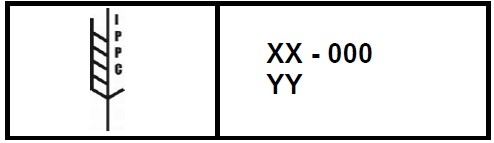
The ISPM 15 treatment certification stamp has several different forms but all contain the same information: The IPPC “Wheat Stamp”, country of origin (xx), facility code (000), and type of treatment (YY). (In the United States, the third-party inspection agency is also included).
ISPM 15 also stipulates that each participating country regulate WPM through their National Plant Protection Organization (NPPO). For the United States, the NPPO is United States Department of Agriculture Animal and Plant Health Inspection Service (USDA APHIS). Through a Memorandum of Understanding (MOU), APHIS authorized the American Lumber Standards Committee (ALSC) to administer the ISPM 15 program. Currently, there are two options for certified treatment, conventional heat treatment (HT) and methyl bromide fumigation (MB).

Source: National Wooden Pallet & Container Association
 

Wednesday, August 17, 2016

Statement on Zika Virus - China and South Korea Shipments


The General Administration of Quality Supervision, Inspection and Quarantine of the People’s Republic of China (AQSIQ) has stated shipments from the United States shall be subject to anti-mosquito treatment.

The ZIKA virus is a human health issue and is related to mosquitos, not wood-boring insects. Therefore, the recognized heat treatment or fumigation of export wood pallets for ISPM 15 compliance is not applicable for ZIKA compliance of the shipment. The entire consignment and container must be anti-mosquito treated and certified pre-shipment. There is no action a wood pallet company can do to assure ZIKA compliance for their customer’s shipment. It is the shipper’s responsibility to ensure the entire shipment is ZIKA compliant.

Inbound shipments without proof of anti-mosquito treatment will be fumigated at the port of discharge in China by the authorities without prior notice. It is the Consignee’s responsibility to inform Shipper (at origin) to provide a certificate proof of treatment before loading the shipment.

While specific details on compliance for the entire shipment have not yet been determined, it is clear this is not a phytosanitary issue. The National Wooden Pallet & Container Association (NWPCA) is actively working with the US Department of Agriculture office of Plant Protection and Quarantine (USDA-PPQ) and monitoring the ZIKA issue with partners like the National Association of Manufacturers (NAM), and will provide further updates as they are received.

Source: National Wooden Pallet & Container Association


Friday, January 22, 2016

Update on ISPM 15 Participating Countries

Below is an updated list of countries participating in the ISPM 15 program:

North America
Africa
United States*  
Egypt
Canada*
Kenya
Mexico
Nigeria
 
Senegal
Latin America
Seychelles
Argentina
South Africa
Brazil
Tanzania
Bolivia
 
Chile
Asia
Columbia
 
Costa Rica
Australia
Cuba
China
Dominican Republic
India
Ecuador
Indonesia
Guatamala
Israel
Honduras
Japan
Jamaica
Jordan
Nicaragua
Lebanon
Paraguay
Malaysia
Peru
New Zealand
Trinidad & Tobago
Oman
Venezuela
Philippines
 
South Korea
Europe
Sri Lanka
European Union**
Syria
Norway
Taiwan
Switzerland
Thailand
Turkey 
Vietnam
Ukraine


*The U.S. and Canada currently maintain a bilateral agreement allowing for the movement of WPM across each other's border without ISPM 15 marks.

**European Union - Austria, Belgium, Bulgaria, Croatia, Cyprus, Czech Republic, Denmark, Estonia, Finland, France, Germany, Greece, Hungary, Ireland, Italy, Latvia, Lithuania, Luxembourg, Malta, Netherlands, Poland, Portugal, Romania, Slovakia, Slovenia, Spain, Sweden, United Kingdom

There are countries not on this list that are enforcing ISPM-15 without any published regulation. It is recommended to use ISPM-15 compliant wood packaging regardless of international destination.

Content courtesy of the NWPCA.

Wednesday, April 10, 2013

Proper Marks on Resawn Lumber

When resawing HT lumber, it is important to make sure that the marks conform to ALSC requirements.

If you are consuming HT lumber to build your own Wood Packaging Material that your facility has resawn inhouse, then no additional marking is required.

If you are selling HT lumber that your facility has resawn, make certain that a complete HT mark is on all pieces of material. If you only have a partial HT mark, another full mark must be applied to the piece. Since the original piece has been altered, it may be necessary to obliterate the original grade marks as well. ALSC Lumber Enforcement Regulation 5.10.1 states "When grade stamped lumber is resawn or remanufactured in such a way as to potentially alter the grade, the original mark shall be removed or obliterated..."  
Sections 5.10.1.1 & 5.10.1.2 offer two exceptions to the obliteration requirement, though. The ALSC Lumber Enforcement Regulations can be accessed at http://www.alsc.org/greenbook%20collection/LumberProgram_EnforcementRegs.pdf. If you have any questions about how these regulations pertain to your specific circumstances, please contact us.

If you purchase resawn lumber, make sure that each piece has a full HT mark on it. If only part of the load is marked, then this material is out of ALSC conformance. The HT marked material would need to be separated from the unmarked pieces. The properly stamped material could then be used in the manufacture of IPPC conforming WPM, and the unmarked material could only be used for domestic purposes unless retreated and subsequently labeled.

Source: Timber Products Inspection, Inc.

Friday, November 30, 2012

Canadian Wood Packaging Bilateral Agreement Update

Update on Canadian Wood Packaging Bilateral Agreement

The USDA reported discussions continue on when the WPM bi-lateral agreement between the U.S.A. and Canada should be dissolved. At this point, an agreement is not expected before the end of this year. Since both parties agree that there should be at least a one year transition period before full implementation should occur, the soonest this could happen is January of 2015. 

Source: Timber Products Inspection, Inc. 

Wednesday, August 1, 2012

Kiln Dried vs. Heat Treated Wood Packing Materials

The term "kiln dried" relates to the moisture content of wood which is typically defined as 19% or below. The term "Heat treated" relates to the core temperature of wood which needs to reach a minimum 133° F for at least 30 minutes in a controlled environment (i.e. a heat chamber or kiln). It is important to realize that wood used in the manufacture of WPM and WPM itself can meet one specification but not the other. If moisture content is the only concern, this can be reached without the required temperature needed to be considered heat treated. Likewise WPM can be heat treated but this process may not allow the wood to reach the minimum moisture content to be considered kiln dried. If you see wood or WPM marked with the term "KD-HT" this means it has met the requirements for both kiln drying (19% or below MC) and heat treating (133° F minimum for at least 30 minutes).

Note: The 133° F temperature can only be used after a verification study is completed on the heat chamber and thermocouples must be calibrated annually. Most facilities operate at 140° F thereby avoiding the above requirements. See ALSC WPM Enforcement Regulations 8.a 2  for more information.

Source: Timber Products Inspection, Inc.

Tuesday, June 5, 2012

Export Packaging Update

Storing Wood Packaging Materials Outside
There  have been  many questions lately regarding whether treated WPM can be stored outside. There are currently no regulations in place restricting where treated WPM can be stored. However exposing WPM to the elements can create post treatment issues that are undesirable to customers. It is recommended that:  
  • The treated WPM be kept off the ground.
  • The surrounding area be treated by pest control professionals.
  • The ALSC regulation for keeping untreated products seperate from treated WPM be strictly enforced.
This will help to keep your ISPM 15 conforming WPM safe from undesirable pests.
Source: Timber Products Inspection, Inc.

Monday, March 5, 2012

Export Packaging ISPM 15 Participating Countries

Here is the updated list of countries participating in the ISPM 15 program:


North AmericaAfrica
United States*  Egypt
Canada* Kenya
MexicoNigeria
Senegal
Latin AmericaSeychelles
ArgentinaSouth Afirica
Brazil Tanzania
Bolivia
ChileAsia Pacific
ColumbiaAustralia
Costa RicaChina
CubaIndia
Dominican RepublicIndonesia
EcuadorIsrael
GuatamalaJapan
HondurasJordan
JamaicaLebanon
NicaraguaMalaysia
ParaguayNew Zealand
PeruOman
Trinidad & TobagoPhilippines
VenezuelaSouth Korea
Sri Lanka
Europe
Syria
European Union**Taiwan
Norway
Thailand
Switzerland Vietnam
Turkey
Ukraine
Croatia

  
*The U.S. and Canada currently maintain a bilateral agreement allowing for the movement of WPM across each other's border without ISPM 15 marks.

**European Union - Austria, Belgium, Bulgaria, Cyprus, Czech Republic, Denmark, Estonia, Finland, France, Germany, Greece, Hungary, Ireland, Italy, Latvia, Lithuania, Luxembourg, Malta, Netherlands, Poland, Portugal, Romania, Slovakia, Slovenia, Spain, Sweden, United Kingdom

There are countries not on this list that are enforcing ISPM-15 without any published regulation. It is recommended to use ISPM-15 compliant wood packaging regardless of international destination.

Content coutesy of the NWPCA.

Wednesday, September 14, 2011

More Federal Wood Packaging Regulations

The U.S. Animal and Plant Health Inspection Service (APHIS) is once again restricting the movement of wood pallets and containers. The federal agency has announced new rules in Massachusetts and Tennessee despite the issuance of an APHIS risk assessment that said there is no evidence that wood packaging contributes to the spread of these pests in the United States.
There has been confusion in the industry as a result of inaccurate reporting that said APHIS would no longer be regulating wood packaging. Following is a brief description of the regulatory authority for restricting the movement of wood packaging:
  • APHIS can regulate interstate movement of wood packaging. The agency can (and does) stop pallets and containers from a county (or entire state) from leaving that state.
  • The agriculture departments in each state are responsible for intrastate movement of wood packaging. They can block wood packaging from traveling from one county in the state to another county in the same state.
APHIS continues to regulate wood packaging via quarantine order in a reactive way when pests reach critical mass. This piecemeal approach is creating an artificial competitive disadvantage for wood packaging companies in quarantine areas.

Source: National Wooden Pallet & Container Association

Tuesday, March 15, 2011

Export Packaging Regulations Helpful Web Pages

ISPM 15 (packaging heat treatment) Document:
http://www.tpinspection.com/download/Attachment4RevisionofISPM15.pdf
ISPM 15 Country Implementation List:
http://www.tpinspection.com/download/HT%20NEWS%200111.pdf
American Lumber Standard Committee WPM Enforcement Procedures:
www.tpinspection.com/download/WPMEnforcementRegulations.pdf
USDA Frequently Asked Questions (general info regarding ISPM 15):
www.aphis.usda.gov/import_export/plants/plant_exports/wpm/wpm_faqs.shtml

Please contact us if we can be of service with your wood or corrugated export packaging needs.
http://www.oxbox.com/

Wednesday, March 2, 2011

Export Packaging Update: US Canada Exemption May End Soon

The bilateral agreement between the US Department of Agriculture (USDA) Animal and Plant Health Inspection Services (APHIS) and the Canadian Food Inspection Agency (CFIA) exempting wood packaging materials (WPM) moving between the countries from ISPM 15 enforcement may be coming to an end.  The ruling is currently under comment.  The US is recommending full phase in by the middle of 2012.

Reasoning for ISPM 15 enforcement is to mitigate the introduction or reintroduction of indigenous and non-indigenous forest pests associated with the movement of wood packaging material from Canada into the United States. 

Please feel free to contact us at esales@oxbox.com for more details.

http://www.oxbox.com/

Content sources:
Edgar Deomano of National Wooden Pallet and Container Association
Bryan Smalley of Timber Products Inspection.

Monday, January 10, 2011

Australia Drops Bark Free Wood Packaging Requirement

Australia adopts bark tolerance for imports defined in the wood packaging standard ISPM 15.

In 2010 the Australian Quarantine and Inspection Service changed their strict bark free wood packaging requirement to be in line with the standard adopted by the International Standards for Phytosanitary Measures.  This requires that solid wood packaging material be debarked, but allows a tolerance for small pieces of bark that have not been completely removed during milling.

For details regarding this regulatory change, please  visit www.oxbox.com/Regulatory/aug2010pg1.htm

Wednesday, August 25, 2010

Export Packaging Regulatory Update

Export packaging regulations are continually changing.  Shipping your products overseas can be costly if the packaging is noncompliant.  Check out the latest export packaging regulatory update at http://www.oxbox.com/Regulatory/aug82010pg1.htm. 
OX BOX is dedicated to heavy-duty and export compliant packaging solutions.  We are a certified supplier of export compliant packaging materials.  Visit us at http://www.oxbox.com/ to learn more about us.