Friday, September 2, 2016

China Zika Free Packaging Requirements


We've been hearing from customers on the issue of the Zika virus and acquiring pallets that are Zika free. It is clear this is not a phytosanitary issue and shipments (and the associated pallets) and containers need to be treated at the port facility.

The issue was raised because the General Administration of Quality Supervision, Inspection and Quarantine of the People’s Republic of China (AQSIQ) has stated shipments from the United States shall be subject to anti-mosquito treatment. The ZIKA virus is a human health issue and is related to mosquitos, not wood-boring insects. Therefore, the recognized heat treatment or fumigation of export wood pallets for ISPM 15 compliance is not applicable for ZIKA compliance of the shipment. The entire consignment and container must be anti-mosquito treated and certified pre-shipment. There is no action a wood pallet company can do to assure ZIKA compliance for their customer’s shipment. It is the shipper’s responsibility to ensure the entire shipment is ZIKA compliant. Inbound shipments without proof of anti-mosquito treatment will be fumigated at the port of discharge in China by the authorities without prior notice. It is the Consignee’s responsibility to inform Shipper (at origin) to provide a certificate proof of treatment before loading the shipment. NWPCA is actively working with the US Department of Agriculture office of Plant Protection and Quarantine (USDA-PPQ) and monitoring the ZIKA issue with partners like the National Association of Manufacturers (NAM), and will provide further updates as we receive them.

For the most recent USDA Foreign Agricultural Service update on China’s requirement on shipments from Zika infected countries please visit palletcentral.com and the USDA-FAS FAQ on Zika.

Source: National Wooden Pallet & Container Association

Wednesday, August 31, 2016

OVERVIEW OF ISPM-15 REQUIREMENTS FOR THE WOOD PACKAGING INDUSTRY

The international transport of solid wood packaging material (WPM) is regulated by the International Plant Protection Convention (IPPC), which is a subdivision of Food and Agriculture Organization (FAO) of The United Nations. The IPPC issues the regulations known as International Standards for Phytosanitary Measures (ISPMs), and the one specific to WPM is ISPM 15.
ISPM 15 stipulates the treatments and protocols necessary to reduce the risk of the introduction and spread of invasive quarantine pests that results from the usage of WPM for shipping items across the globe. Under ISPM 15, there is no paperwork assigned to WPM that is certifiably treated. Instead, a stamp is applied to the packaging to signify treatment. Countries that choose to participate in the ISPM 15 program only accept and export properly treated and marked WPM.
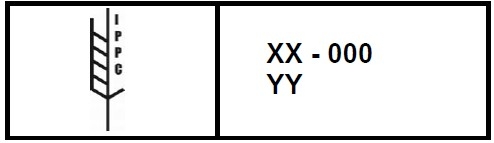
The ISPM 15 treatment certification stamp has several different forms but all contain the same information: The IPPC “Wheat Stamp”, country of origin (xx), facility code (000), and type of treatment (YY). (In the United States, the third-party inspection agency is also included).
ISPM 15 also stipulates that each participating country regulate WPM through their National Plant Protection Organization (NPPO). For the United States, the NPPO is United States Department of Agriculture Animal and Plant Health Inspection Service (USDA APHIS). Through a Memorandum of Understanding (MOU), APHIS authorized the American Lumber Standards Committee (ALSC) to administer the ISPM 15 program. Currently, there are two options for certified treatment, conventional heat treatment (HT) and methyl bromide fumigation (MB).

Source: National Wooden Pallet & Container Association
 

Wednesday, August 17, 2016

Statement on Zika Virus - China and South Korea Shipments


The General Administration of Quality Supervision, Inspection and Quarantine of the People’s Republic of China (AQSIQ) has stated shipments from the United States shall be subject to anti-mosquito treatment.

The ZIKA virus is a human health issue and is related to mosquitos, not wood-boring insects. Therefore, the recognized heat treatment or fumigation of export wood pallets for ISPM 15 compliance is not applicable for ZIKA compliance of the shipment. The entire consignment and container must be anti-mosquito treated and certified pre-shipment. There is no action a wood pallet company can do to assure ZIKA compliance for their customer’s shipment. It is the shipper’s responsibility to ensure the entire shipment is ZIKA compliant.

Inbound shipments without proof of anti-mosquito treatment will be fumigated at the port of discharge in China by the authorities without prior notice. It is the Consignee’s responsibility to inform Shipper (at origin) to provide a certificate proof of treatment before loading the shipment.

While specific details on compliance for the entire shipment have not yet been determined, it is clear this is not a phytosanitary issue. The National Wooden Pallet & Container Association (NWPCA) is actively working with the US Department of Agriculture office of Plant Protection and Quarantine (USDA-PPQ) and monitoring the ZIKA issue with partners like the National Association of Manufacturers (NAM), and will provide further updates as they are received.


Source: National Wooden Pallet & Container Association


Friday, January 22, 2016

Update on ISPM 15 Participating Countries

Below is an updated list of countries participating in the ISPM 15 program:

North America
Africa
United States*  
Egypt
Canada*
Kenya
Mexico
Nigeria
 
Senegal
Latin America
Seychelles
Argentina
South Africa
Brazil
Tanzania
Bolivia
 
Chile
Asia
Columbia
 
Costa Rica
Australia
Cuba
China
Dominican Republic
India
Ecuador
Indonesia
Guatamala
Israel
Honduras
Japan
Jamaica
Jordan
Nicaragua
Lebanon
Paraguay
Malaysia
Peru
New Zealand
Trinidad & Tobago
Oman
Venezuela
Philippines
 
South Korea
Europe
Sri Lanka
European Union**
Syria
Norway
Taiwan
Switzerland
Thailand
Turkey 
Vietnam
Ukraine


*The U.S. and Canada currently maintain a bilateral agreement allowing for the movement of WPM across each other's border without ISPM 15 marks.

**European Union - Austria, Belgium, Bulgaria, Croatia, Cyprus, Czech Republic, Denmark, Estonia, Finland, France, Germany, Greece, Hungary, Ireland, Italy, Latvia, Lithuania, Luxembourg, Malta, Netherlands, Poland, Portugal, Romania, Slovakia, Slovenia, Spain, Sweden, United Kingdom

There are countries not on this list that are enforcing ISPM-15 without any published regulation. It is recommended to use ISPM-15 compliant wood packaging regardless of international destination.

Content courtesy of the NWPCA.

Wednesday, November 25, 2015

Ox Box Eco-Shield Weatherproof Triple-wall Boxes Perform Beyond Expectations

Challenge:
A North American producer of pest control bait needs to ship their product in bulk to remote locations around the globe.  The packaging required to contain the product would need to be extremely strong to stack thousands of pounds of product and capable of being exposed to challenging environments.
 
Solution:
Ox Box designs and manufactures Eco-Shield bulk boxes strong enough to contain and stack the heavy product.  The weatherproof material enables the boxes to survive long ocean travel while being exposed to the elements.
 
"We now regard Ox Box as the gold standard for packaging rodent bait for remote locations. While loading bait in Tahiti for shipping to the islands, the local ship’s crew stacked some of the Ox Boxes 7 high and then for good measure threw some other stuff on top. The ship then went through some pretty rough seas to get to the project sites. Most of the Ox Boxes were then covered in salt spray during the unloading process and subsequently drenched in a 16 inch tropical downpour over a 48 hour period.  Despite the ill treatment, the Ox Boxes held up beautifully."
 
 
Click here for Eco-Shield product information.


Thursday, October 16, 2014

Weatherproof Corrugated Crate Boxes Save Parts Distributor Time and Money

Problem:
An international distributor of heavy equipment parts makes wood crates for shipping extra long parts.  The wood crates are expensive and time consuming to build.


Solution:
Ox Box designs and manufactures economical Eco-Shield corrugated crate boxes.  The Eco-Shield crates are weatherproof, extremely strong, and easy to assemble.  New technology that incorporates plastic from recycled water bottles enables the corrugated material to withstand exposure to the elements.  Designed for quick assembly, the Eco-Shield crate boxes enable the distributor to pack and ship efficiently.  In addition, the Eco-Shield crates are recyclable.      

Benefits:
* Eco-Shield crate boxes save money.  Fraction of the cost of expensive wood crates.
* Eco-Shield crate boxes reduce packing time and increase output.
* Lightweight to reduce shipping costs.
* Eco-Shield is recyclable with other corrugated materials.

Click here for Eco-Shield product information.


Eco-Shield Weatherproof Crate Boxes

Monday, May 5, 2014

Eco-Shield Weatherproof Triple-wall Crate Boxes Save Rail Equipment Manufacturer Money

Problem:
A manufacturer of rail car components purchases wood boxes to ship products that are often stored outdoors. The wood crates are heavy and expensive.

Solution:
Ox Box designs and manufactures economical Eco-Shield triple-wall crate boxes. The Eco-Shield crates are weatherproof, extremely strong and light weight. New technology that incorporates plastic from recycled bottles enables the corrugated materials to withstand exposure to the elements. The Eco-Shield boxes have enabled the elimination of the expensive and heavy wood crates. In addition, the Eco-Shield crates are recyclable with other corrugated materials.


Eco-Shield Benefits:
* Eco-Shield crate boxes save money - fraction of the cost of wood crates.
* Durable and weatherproof.
* Lightweight for easier handling and reduced shipping costs.
* Recyclable with other corrugated materials.

Click here for Eco-Shield product information.

Thursday, August 1, 2013

Ox Box Eco-Shield Weatherproof Triple-wall Boxes Aid Rescue Mission on South Pole Island

 
"At about 17:00 on May 18th, as the light was fading at the end of a bitterly cold day, the last bait pellet from the last bag at the last depot dropped onto the Parydin Peninsula at the western tip of South Georgia.  That pellet bounced and settled into the scree on a steep mountainside, and the moment that had seemed so far away for so long was finally upon us.  We had finished.  We had really finished."

This was part of the final transmission of zoologist Tony Martin whose 25 man team had undertaken the largest rat eradication in history.  An incredible habitat restoration project to save populations of wildlife indigenous to this remote location from the ravenous creatures.

Ox Box was proud to be part of this historic accomplishment: 

A hurdle which threatened the success of the project before it would begin was a method of containing the pelletized poison for delivery.  The journey would be 17,000 miles and take four months mostly on board ships.  Once there, the product would need to be air lifted to land where it would be stored outside for several months.  After use, the containers would need to be left behind with little or no environmental impact. 

An ideal solution would be Ox Box's Eco-Shield weatherproof crate boxes.  Eco-Shield is a corrugated material that incorporates plastic from recycled water bottles to enable the boxes to withstand exposure to the elements.  The unique chemical make up allows the boxes to be recyclable and biodegradable.  In addition to being ecologically sound, Eco-Shield crate boxes are extremely strong and durable.  This would prove critical for the project as each box would need to contain 800 lbs of pellets and stack three high.

"We deployed 450 Ox Boxes by helicopter and used the contents of every one.  The boxes were absolutely superb.  Not one was damaged or crushed when we unstuffed them.  I rather think that they will quickly become the industry standard for this type of work now."  Tony Martin


Eco-Shield Crates Deployed to Island
 
Eco-Shield Crates Stored Outdoors


Monday, June 3, 2013

The Myth: Making paper destroys forests

The Myth: Making paper destroys forests.
The Fact: Paper production supports sustainable forest management.
The U.S. paper industry promotes sustainable forestry and depends on sustainable forest growth to provide a reliable supply of wood fiber. Paper manufacturers do this by encouraging forest sustainability through their purchase and use of certified wood fiber and by promoting sustainable forest management policies and practices at home and around the globe. By providing a dependable market for responsibly grown fiber, the paper industry encourages landowners to continue managing their forestland instead of selling it for development or other non-forest uses. All cited facts are quoted directly from the source unless otherwise noted. Where indicated, Two Sides U.S. has summarized lengthy information, but links original sources are provided in the footnotes. Information in brackets was added by Two Sides U.S. for clarification purposes. How does the U.S. paper industry promote and support sustainable forest growth?
Sustainable forest management is commonly viewed as one of the most important contributions that the forestry sector can make to sustainable development.1 [The future of a thriving print and paper industry, and all its economic spin-offs, also depends on well-managed and healthy forests]. 1 UN FAO, 1995. 2 WBCSD and NCASI, 2005. 3 AF&PA, 2011.  The income landowners receive for products grown on their land encourages them to maintain, renew and manage this valuable resource sustainably. This is an especially important consideration in places facing economic pressures to convert forestland to non-forest uses.2 (Two Sides Summary) As part of its Better Practices, Better Planet 2020 initiative, the U.S. paper and forest products industry is encouraging forest sustainability by seeking further increases in the amount of fiber procured from certified forest lands or through certified fiber sourcing programs in the U.S. by 2020. The industry is also working with governments, industry and other stakeholders to promote policies around the globe to reduce illegal logging. Better Practices, Better Planet 2020 is one of the most extensive and quantifiable set of sustainability goals for a major manufacturing industry in the United States. AF&PA member companies are committed to achieving these goals by transparently reporting the industry’s progress through an annual report on paper recovery and a biennial Sustainability Report published by their primary trade group, the American Forest and Paper Association (AF&PA).3 [AF&PA compiles and  
analyzes data from member companies that make more than 75% of the U.S.’s pulp, paper, paper-based packaging and wood building materials.]
 All members of the American Forest and Paper Association owning forestland must conform to one or more of the major credible certification systems in the United States. These include: the seven regional forest management standards developed for the U.S. by the Forest Stewardship Council (FSC); the Sustainable Forestry Initiative® (SFI®) program; and systems endorsed by the international Program for the Endorsement of Forest Certification (PEFC). In North America, PEFC has endorsed the Canadian Standards Association program and the American Tree Farm System®.
In addition, all AF&PA members sourcing fiber directly from the forest are required to adhere to the organization’s Sustainable Procurement Principles. These principles require support of programs that supply regionally appropriate information and services to forest landowners regarding best management practices; reforestation; afforestation (conversion of non-forested land to forests); visual quality manage-ment; management of harvest residue; conservation of critical wildlife habitat; threatened and endangered species; and Forests with Exceptional Value. Among other things, these principles encourage the use of qualified resource professionals and loggers when applying sustainable forest management principles and encourage programs for the purchase of raw material from recognized qualified logging professionals.
4 [AF&PA compiles and analyzes data from member companies that make more than 75% of the U.S.’s pulp, paper, paper-based packaging and wood building materials.] 4 AF&PA, 2010. 5 USDA Forest Service, 2010. 6 SAF, 2007. What is the evidence that U.S. forests are not being destroyed by papermaking, and what are the causes that may contribute to future destruction?
In the United States, we grow more trees than we harvest. The country continues to benefit from a large and diverse forest inventory distributed across about one-third of total land area. The amount of U.S. forestland has remained essentially the same for the last 100 years at about 750 million acres, even though the U.S. population tripled during the same period. 5  Over the last 50 years, the volume of trees growing on U.S. forestland increased 49%.6  The gross statistics on forest area mask substantial fragmentation and outright losses in U.S. forest land at the regional level, particularly in areas adjacent to growing urban areas or where recreational development is prominent. Fragmentation and loss is further compounded by the sale of forest lands to firms and individuals whose primary focus is not active forest management for timber production, forest conservation, or other purposes. With the loss of an active management focus and the revenue streams
 
that often accompany it, the survival of these forests and their associated ecosystem services is in question.7
7 Ibid, USDA Forest Service, 2010 8 USFS, 2007. 9 ibid, USDA Forest Service, 2010. 10 Binkley, C., 2007. 11 UN FAO, 2010. 12 Seneca Creek Associates LLC and Wood Resources International LLC., 2004.  While total forestland area in the U.S. has been relatively stable over the last century, a net loss of 20 million acres (2.7%) is projected between 2000 and 2050. Most of that loss will be caused by development.8 Steady demand for residential and other development continues to fragment forest ecosystems both in urban areas and in more natural environments that are targets for vacation and retirement home development.9
 Since the mid-1990s, integrated paper companies (industrial landowners) have sold most of their land and these large-scale timberland ownerships have been restructured into Timber Management Organizations (TIMOs) or Real Estate Investment Trusts (REITs), which are primarily managers and holders of timberlands for institutional investors. This shift occurred, in part, due changes in the U.S. tax code. These changes have led to the widespread sale of productive timberland, including subdivision of land into small parcels for development, increasing forest fragmentation across the United States.
10 Globally, outbreaks of forest insect pests damage some 86 million acres of forest annually, primarily in the temperate and boreal zone. The mountain pine beetle has devastated more than 27 million acres of forest in the western United States and Canada since the late 1990s – an unprecedented outbreak exacerbated by higher winter temperatures.11 Perhaps not surprisingly, illegal forest activity is also more pronounced where corruption is high. The adjacent figure displays the relationship between corruption and illegal logging using our independently derived estimates of suspicious log supply in elected countries. With almost 60% of its production suspect, Indonesia stands out as the country with both the highest rate of illegal activity and the most suspicious volume. 12 13 WWF, 2010a. 14 WWF, 2010b. 15 U.S. Forest Service, 2009. 16 SFI Progress Report, 2011. Can responsible forest management be both commercially and environmentally beneficial?
Responsibly managed forests are necessary for the maintenance of biodiversity and ecosystems services, both on individual sites and within the wider landscape. Forest management, including intensive commercial management, can be a critical and cost-effective conservation tool within larger-scale conservation strategies. Well-managed commercial or community forests can for example provide vital buffers for and links between protected areas. Forest management should therefore seek to maintain forest quality and not degrade either the timber resource or the range of associated goods and services (non-timber forest products, environmental services, biodiversity, spiritual values, recreational uses, etc.).13 Well-managed forests maintain biodiversity and other important ecosystem services such as protection of water sheds. These forests also provide benefits for local people.14 Who owns U.S. forestland and how much of it is certified?
Fifty-six percent of the 751 million acres of U.S. forestland (420 million acres) is privately owned. Of this private forest land, 62 percent (260 million acres) is owned by families and individuals in what we call "family forests." America’s 10 million family forest owners are diverse and dynamic. They are pivotal for the protection and sustainable management of our forests across the landscape. The remaining private forest land is owned by corporations, conservation organizations, clubs, Native American tribes, and others. Forty-four percent of U.S. forestland is publicly owned. The Federal government administers 76% of the public forestland. State forestry, park and wildlife agencies account for most of the 21 percent of public forestland that is state-owned. The remaining 3% of the public forestland is owned by local governments, such as counties and towns (see figure below).15
 (
Two Sides Summary) Forest certification remains a proven way to promote environmental and social responsibility. The three major U.S. certification systems – Sustainable Forestry Initiative® (SFI®) , Forest Stewardship Council™(FSC®) and American Tree Farm System – certify a combined total of more than 118 million acres16, representing 28% of privately owned. U.S. forestland.  
 While in different manners, the ATFS, FSC and SFI systems include the fundamental elements of credibility and make positive contributions to forest sustainability. Proponents of individual certification programs often promote their option as the best or only option. This has little to do with quality and everything to do with marketing and selling their program. No certification program can credibly claim to be "best", and no certification program that promotes itself as the only certification option can maintain credibility. Forest ecosystems are complex and a simplistic "one size fits all" approach to certification cannot address all sustainability needs.
17 17 National Association of State Foresters, 2008. What is the definition [and perception] of deforestation?
[Two Sides Summary] Deforestation is the removal of a forest or stand of trees where the land is thereafter converted to a non-forest use18. Examples of deforestation include conversion of forestland to farms, ranches, or urban use. 18 SAF, Dictionary of Forestry 19 SAF, Dictionary of Forestry 20 Oliver, C.D. Forest Development in North America following major disturbances. For. Ecol. Mgmt. 3(1980):153–168 21 Ibid, FAO  [Two Sides Summary] The term deforestation is often misused to describe any activity where all trees in an area are removed. However in temperate climates, the removal of all trees in an area—in conformance with sustainable forestry practices—is correctly described as regeneration harvest19. In temperate climates, natural regeneration of forest stands often will not occur in the absence of disturbance, whether natural or anthropogenic20.  A reduction in forest area can happen through either of two processes: deforestation and natural disasters. Deforestation, which is by far the most important, implies that forests are cleared by people and the land converted to another use, such as agriculture or infrastructure. Natural disasters may also destroy forests, and when the area is incapable of regenerating naturally and no efforts are made to replant, it too converts to other land.
An increase in forest area can also happen in two ways: either through afforestation (i.e. planting of trees on land that was not previously forested) or through natural expansion of forests (e.g. on abandoned agricultural land, a process which is quite common in some European countries). Where part of a forest is cut down but replanted (reforestation) or grows back on its own within a relatively short period (natural regeneration), there is no change in forest area.21
What are the causes of deforestation and where is it occurring?
At a regional level, South America suffered the largest net loss of forests between 2000 and 2010 – about 4.0 million hectares per year – followed by Africa, which lost 3.4 million hectares annually. Oceania also reported a net loss of forest (about 700 000 ha per year over the period 2000–2010), mainly due to large losses of forests in Australia, where severe drought and forest fires have exacerbated the loss of forest since 2000. The area of forest in North and Central America was estimated as almost the same in 2010 as in 2000. The forest area in Europe continued to expand, although at a slower rate (700 000 ha per year) than in the 1990s (900 000 ha per year). Asia, which had a net loss of forest of some 600 000 ha annually in the 1990s, reported a net gain of forest of more than 2.2 million hectares per year in the period 2000–  
2010, primarily due to the large-scale afforestation reported by China and despite continued high rates of net loss in many countries in South and Southeast Asia (see figure below).22
[Two Sides Summary] According to the United Nations Framework Convention on Climate Change (UNFCCC) secretariat, the overwhelming direct cause of deforestation is agriculture. Subsistence farming is responsible for 48% of deforestation; commercial agriculture is responsible for 32% of deforestation; logging (legal and illegal) is responsible for 14% of deforestation and fuel wood removals make up 5% of deforestation.23
The paper industry is a relatively small user of wood. Of the wood extracted from the world’s forests, 53% is used for energy production, 28% is used by sawmill and only around 11% is used directly by the paper industry.24
Among countries with a per capita GDP of at least US$4,600, net deforestation rates have ceased to increase.25
Source: Two Sides US, Inc.

Wednesday, April 10, 2013

Proper Marks on Resawn Lumber

When resawing HT lumber, it is important to make sure that the marks conform to ALSC requirements.

If you are consuming HT lumber to build your own Wood Packaging Material that your facility has resawn inhouse, then no additional marking is required.

If you are selling HT lumber that your facility has resawn, make certain that a complete HT mark is on all pieces of material. If you only have a partial HT mark, another full mark must be applied to the piece. Since the original piece has been altered, it may be necessary to obliterate the original grade marks as well. ALSC Lumber Enforcement Regulation 5.10.1 states "When grade stamped lumber is resawn or remanufactured in such a way as to potentially alter the grade, the original mark shall be removed or obliterated..."  
Sections 5.10.1.1 & 5.10.1.2 offer two exceptions to the obliteration requirement, though. The ALSC Lumber Enforcement Regulations can be accessed at http://www.alsc.org/greenbook%20collection/LumberProgram_EnforcementRegs.pdf. If you have any questions about how these regulations pertain to your specific circumstances, please contact us.

If you purchase resawn lumber, make sure that each piece has a full HT mark on it. If only part of the load is marked, then this material is out of ALSC conformance. The HT marked material would need to be separated from the unmarked pieces. The properly stamped material could then be used in the manufacture of IPPC conforming WPM, and the unmarked material could only be used for domestic purposes unless retreated and subsequently labeled.

Source: Timber Products Inspection, Inc.

Friday, November 30, 2012

Canadian Wood Packaging Bilateral Agreement Update

Update on Canadian Wood Packaging Bilateral Agreement

The USDA reported discussions continue on when the WPM bi-lateral agreement between the U.S.A. and Canada should be dissolved. At this point, an agreement is not expected before the end of this year. Since both parties agree that there should be at least a one year transition period before full implementation should occur, the soonest this could happen is January of 2015. 

Source: Timber Products Inspection, Inc. 

Wednesday, August 8, 2012

Weatherproof Corrugated Crate Boxes Save Parts Distributor Time and Money

Problem:
An international distributor of heavy equipment parts is forced to purchase wood Nefab crates due to a requirement to store product outdoors.  The wood crates are expensive and difficult to assemble.
 
Nefab boxes with required hardware.
Eco-Shield boxes require no hardware


Solution:

Ox Box designs and manufactures economical Eco-Shield corrugated crate boxes.  The Eco-Shield crates are weatherproof, extremely strong, and easy to assemble.  New technology that incorporates plastic from recycled water bottles enables the corrugated material to withstand exposure to the elements.  Stacking strength of the Eco-Shield crates exceed 1000 lbs.  Designed for quick assembly, the Eco-Shield crate boxes enable the distributor to pack and ship efficiently.  In addition, the Eco-Shield crates are recyclable.      

Benefits:
* Eco-Shield crate boxes save money.  Fraction of the cost of expensive wood crates.
* Eco-Shield crate boxes reduce packing time and increase output.
* Lightweight to reduce shipping costs.
* Eco-Shield is recyclable with other corrugated materials.

Click here for Eco-Shield product information.


Eco-Shield Weatherproof Crate Boxes

Wednesday, August 1, 2012

Kiln Dried vs. Heat Treated Wood Packing Materials

The term "kiln dried" relates to the moisture content of wood which is typically defined as 19% or below. The term "Heat treated" relates to the core temperature of wood which needs to reach a minimum 133° F for at least 30 minutes in a controlled environment (i.e. a heat chamber or kiln). It is important to realize that wood used in the manufacture of WPM and WPM itself can meet one specification but not the other. If moisture content is the only concern, this can be reached without the required temperature needed to be considered heat treated. Likewise WPM can be heat treated but this process may not allow the wood to reach the minimum moisture content to be considered kiln dried. If you see wood or WPM marked with the term "KD-HT" this means it has met the requirements for both kiln drying (19% or below MC) and heat treating (133° F minimum for at least 30 minutes).

Note: The 133° F temperature can only be used after a verification study is completed on the heat chamber and thermocouples must be calibrated annually. Most facilities operate at 140° F thereby avoiding the above requirements. See ALSC WPM Enforcement Regulations 8.a 2  for more information.

Source: Timber Products Inspection, Inc.

Wednesday, July 11, 2012

Containerboard Price Hikes Appear Imminent

A few months back, we didn’t expect to be talking about an autumn price
initiative. But, . . . here we go. Over the next several days, DB believes we
could hear about containerboard price hike announcements in the $40-60/ton
range. Since industry convention is to provide 30 days notice, July
announcements would allow producers to begin raising prices before Labor
Day, taking advantage of a seasonal pick-up in the market. For the record, we
are not including any H2 increase in our earnings estimates. Any success
would be upside to our existing numbers.
The expected initiatives appear largely driven by tighter supplies. During April
and May, the industry reduced containerboard inventories by nearly 200K/tons.
Levels are now at historically lean levels. From a demand standpoint, producer
& broker contacts are reporting surprisingly strong order backlogs with
delivery dates now stretching into later half of August. Industry contacts are
also noting: (1) willingness by independent converters to accept a
containerboard hike in order to raise box prices & restore margins, (2)
completion of International Paper’s acquisition of Temple-Inland and the
subsequent DOJ-mandated disposal of 3 containerboard mills, and (3) Rock-
Tenn’s mid-2011 acquisition of Smurfit-Stone.
Source: Mark Wilde Research Analyst, Debbie Jones Research Analyst - Deutshe Bank Market Researh